If you’re trying to warm up a chilly room without major renovations, you’ve probably looked at adding cellular shades or thermal curtains. In short, both help; but well-fitted cellular blinds typically insulate better than standard curtains, while properly installed thermal curtains still deliver solid gains. The best results often come from using both together.
What the evidence says
- Curtains reduce winter heat loss by around 10% when drawn, according to the US Department of Energy (DOE)
- Research by the British Blind & Shutter Association (BBSA) found that window coverings can decrease heat loss through windows by up to 33%. Cellular blinds were among the best insulating window coverings.
- Thermal curtains also help, particularly when they’re long, lined, and sealed at the edges and top.
- With both cellular blinds and thermal curtains, the important thing is that they are installed tightly to the window to prevent heat from sneaking behind the fabric and escaping through the glass.
- Day-to-day use matters in winter. Open your blinds/curtains on sunny days to let in free solar heat, then close them before dusk to trap the heat you’ve gained.
Why windows leak so much heat (and why window coverings help)
Glass is much less insulating than solid walls, so window are a major source of heat loss. Increasing the thermal resistance and stopping convective draughts at the window surface are the two benefits you get from window coverings. Cellular blinds do this by trapping air in their cells and between the blind and the glass. Lined curtains do it by creating a layer of still air when closed.
Cellular blinds vs. thermal curtains
Cellular blinds
Pros
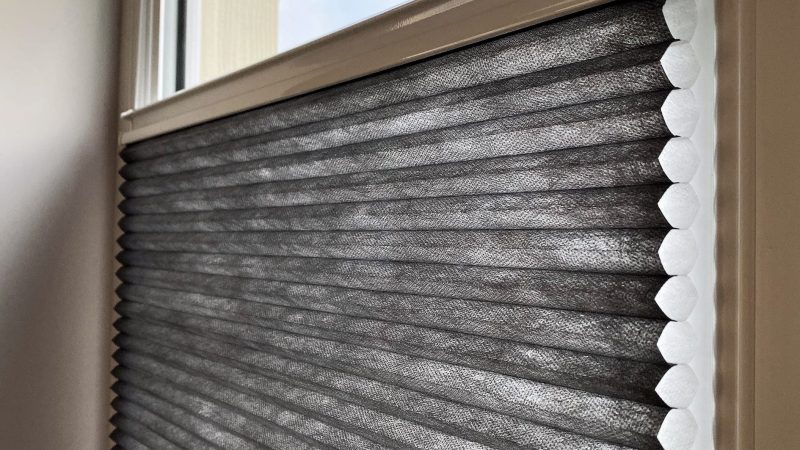
- The air cells provide high levels of insulation. They are best fitted snugly in the window frame or with side channels.
- Can be automated to close at dusk and open at dawn for best results.
- Offer more precise light control because you can set them at many positions (and even top-down/bottom-up), which is handy in winter when you want daylight without losing too much heat.
Cons
- If your blinds are not fitted correctly and have gaps at the edges, they will not perform as well.
Thermal curtains
Pros
- Lined curtains have a proven benefit in the winter.
- It’s easy to add pelmets and side returns to your curtains to keep air from escaping around the sides.
Cons
- If your curtains are long and hang over a radiator, they’ll trap heat at the window instead of inside your room.
So, which keeps a room warmer?
If you want precise light control, easy cleaning and a neat finish, blinds are hard to beat. Choose a well-fitted cellular blind, ideally with side channels.
If you’re after softness, sound absorption and a cosy layered look, choose curtains. Go heavy, lined, and long. Add a pelmet and side returns so air can’t circulate behind the fabric. That brings you closer to blind-like performance and also gives excellent blackout.
If you want the warmest possible window, layer them: cellular blind close to the glass plus thermal curtains with a pelmet. This pairing gives you the best of both worlds: fine light control from the blind and strong heat trapping from the curtain. Ideal for winter use!
Practical buying guide and tips for setup
- Prioritise fit and sealing
For blinds, look for side channels or opt for made-to-measure blinds that minimise gaps. For curtains, install a pelmet or valance and side returns. - Choose the most insulating type of cellular blinds
Deeper cells or double layers of cells can insulate more. - Use schedules
In the winter, open your blinds or curtains on sunny days to capture free solar heat, then close them before dusk to trap the warmth you’ve gained. In the summer, keep them closed on your sun-facing windows during the hottest hours to keep your home cool and comfortable. - Mind the radiator
Don’t let your curtains trap radiator heat against a cold window. Keep your fabric behind the radiator or above it.
If you’d like to see what these options look like in real life, come and try the fabrics and mechanisms for yourself. We’ll help you compare options and match colours to your home. Visit our showroom, book a free consultation, or find out more about our range of blinds and curtains.