Awnings were once a familiar sight on British high streets, cafés and seaside buildings. For a while, however, they developed a slightly old-fashioned reputation. Many homeowners began choosing conservatories, permanent patio roofs and large parasols instead. Now, awnings are making a noticeable comeback.
After several very hot summers, we are paying closer attention to shade, solar heat gain and how comfortably we can use our gardens. At the same time, modern awnings have become easier to operate and far more adaptable than many of the old systems people remember.
So, when were awnings invented, why did they fall out of favour and what makes today’s designs different?
A brief history of awnings
You may think of awnings as a Victorian invention, but the basic idea is thousands of years old. Records from ancient Egypt and Syria describe woven mats being used to shade homes and market stalls. The Romans developed the idea on a much larger scale. Retractable fabric coverings protected spectators in amphitheatres and stadiums, including the Colosseum. These early awnings were operated using ropes and supports inspired by the rigging found on sailing ships. Although their scale was impressive, their purpose was quite familiar: to create shade when it was needed without constructing a permanent roof.
The fundamental design has changed surprisingly little over time. A piece of fabric is extended from a building to provide shelter, then removed or retracted when it is no longer required.
How awnings became a common sight in Britain
Awnings became particularly prominent during the 19th century.
Early designs used canvas stretched between the building and a front bar, which was often supported by posts. More sophisticated retractable frameworks became common later in the century.
As windows became larger, businesses gained more space to display their products. The downside was that more sunlight could enter the premises. Awnings, therefore, became especially useful for shops.
A shop awning helped to:
- Shade the window
- Reduce glare
- Limit solar heat gain
- Protect merchandise and fabrics from strong sunlight
- Shelter customers outside
- Provide space for a shop name
- Allow daylight back in when retracted
External blinds and awnings became increasingly varied during the Georgian and Victorian periods. By the Victorian era, numerous patented styles were available. Some even included fabric side panels to stop low sunlight entering around the edges. Striped canopies eventually became closely associated with the traditional British high street, commonly seen as a feature above shop windows.
Why were awnings not used anymore?
Building design changed throughout the 20th century. Internal blinds, window films and mechanical cooling offered alternative ways to manage bright sunlight and heat. Homeowners also began adding conservatories, permanent patio roofs and other fixed structures to their properties.
Older awnings could require considerable maintenance. Traditional canvas was vulnerable to prolonged exposure to the weather, while timber boxes and manual mechanisms needed regular care. Some people also began to associate striped fabrics and projecting shop blinds with an earlier period.
In Britain, we gradually became less accustomed to using external shading. When a room became too bright or warm, the usual response was to close the curtains or lower an internal blind.
Curtains and blinds remain extremely useful for privacy and light control. However, internal blinds do not prevent the glass itself from heating and radiating warmth into the room. External shading addresses the problem earlier by intercepting some direct sunlight before it reaches the window. This practical advantage is one reason why awnings are attracting attention again.
Why are awnings becoming more commonly used again?
The awning may be an old idea, but it solves several very modern concerns.
Hotter summers have made shade a priority
Recent summers have made many of us more aware of just how exposed our homes and gardens are. A retractable awning creates shade over the patio and can help reduce the amount of direct sunlight reaching nearby windows and doors. You can extend it during the hottest part of the day, then retract it when the sun moves away.
The flexibility an awning offers is well suited to the British climate. As we still experience mild weather throughout most of the year, we do not necessarily want permanent shade.
Just to clarify, an awning will not remove every source of heat or replace suitable ventilation. It can, however, help you address direct solar gain while also making the adjoining outdoor space more comfortable.
We want to use our garden as living spaces
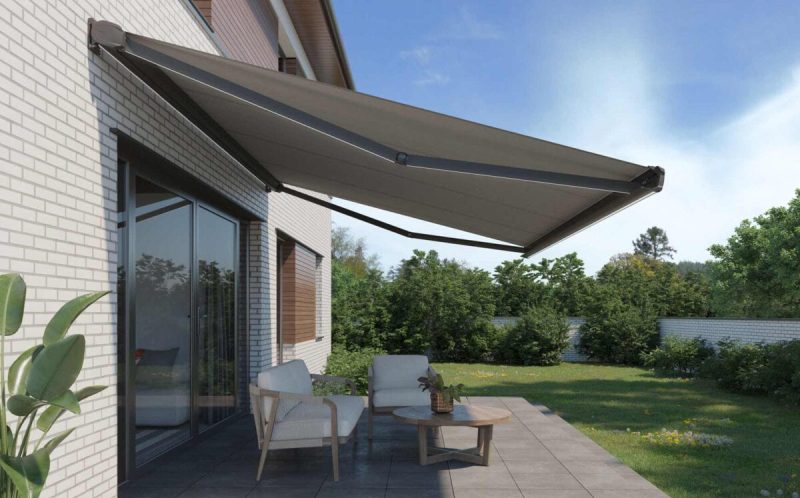
We use patios for eating, entertaining, working and relaxing. The problem is that a completely exposed area can be difficult to enjoy when the sun is strong. A retractable awning provides flexible coverage without permanently enclosing the space. You can create shade over a table or seating area, then retract the awning when you want an open view of the sky.
Depending on the model, pitch and weather conditions, an awning may also provide shelter during a light shower. However, a retractable awning is primarily a solar shading product. It should not be treated as a permanent all-weather roof.
Traditional design is coming back into fashion
For some homeowners, the appeal is partly nostalgic. Striped awnings can evoke cafés, coastal resorts and holidays in the Mediterranean. What might once have seemed old-fashioned can now introduce colour and personality to a garden.
Of course, stripes are not your only option. Modern fabric collections include subtle neutrals, bold plain colours and understated patterns. You can choose a design that becomes a focal point or one that blends with the exterior of your home.
How do modern awnings differ from old ones?
The basic purpose of an awning remains the same, but almost every component has been improved.
Cassette systems
Traditional designs often left the rolled fabric or parts of the mechanism exposed. A modern full cassette awning encloses the fabric and folding arms inside a streamlined casing when retracted. This way, the system is protected from dirt and weather exposure. It also looks better against the wall.
More durable fabrics
Traditional awnings were commonly made from canvas. Today, manufacturers can use fabrics specifically developed for prolonged outdoor exposure. Solution-dyed acrylic fabric is one example. Instead of applying colour only to the surface, pigments are introduced during the manufacture of the fibres. This helps the colour withstand sunlight and changing weather conditions.
Motorised controls
Many older awnings relied on ropes, poles or manual winding mechanisms. Manual operation is still available and can be perfectly suitable for a smaller system. However, modern electric awnings can also be operated using a wall switch or remote control.
Motorisation makes it easier to respond as the sun moves around your property. It can be particularly useful for larger awnings or customers who expect to adjust the system regularly. Selected models can also connect to smartphone apps, voice assistants or wider smart-home systems.
Sun and wind sensors
A sun sensor triggers the awning, causing it to open when sunlight reaches a predetermined level. This may be helpful if you want to shade windows or garden furniture without having to micromanage the controls.
A wind sensor can tell the awning to retract when conditions become unsuitable. It does not make the system safe in every type of weather, but it provides an additional level of protection when used and configured correctly.
Integrated lighting and heating
A traditional awning was principally used during daylight hours. Modern awnings allow you to enjoy your garden for longer throughout the year.
Selected awnings can include LED lighting in the cassette, arms or front profile. Compatible infrared heaters can also make a seating or dining area more comfortable when the temperature drops later in the day.
Find the right awning for your garden
Although the basic principle is ancient, modern cassette designs, outdoor fabrics, motorisation and optional accessories have transformed the way awnings look and operate.
If you are considering an awning for your home, visit our Rochester showroom or book a free home consultation. We can show you the available fabrics, controls and designs, then help you find an awning that suits your property and the way you use your garden.